Scouting in a Packed Calendar: How Program Leaders Can Help Families Say Yes Without Saying No to Everything Else
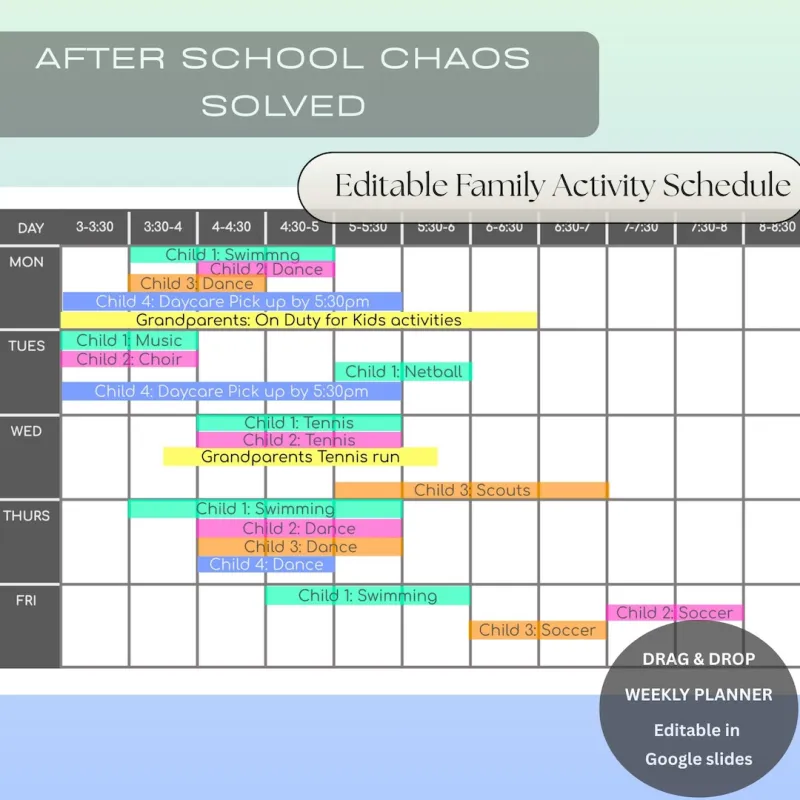
Photo: busy family calendar planning youth activities schedule, via i.etsystatic.com
Ask any Scout parent what stands between their child and consistent troop participation, and the answer is rarely a lack of interest. More often, it is a Tuesday night that already belongs to travel soccer, a weekend campout that conflicts with a regional swim meet, or a Wednesday meeting that runs directly into a homework-heavy stretch before semester finals. The modern American family is not disengaged from scouting — it is simply overcommitted across the board.
For troop leaders and youth program coordinators, this reality presents both a challenge and an opportunity. Organizations that acknowledge the complexity of today's family schedules — and adapt accordingly — are far better positioned to retain members and attract new ones than those that expect families to restructure their lives around a fixed program model.
Understanding the Landscape of Competing Commitments
Over the past two decades, youth sports have grown increasingly time-intensive. Travel leagues, club teams, and tournament schedules now consume entire weekends for millions of American families from late elementary school onward. At the same time, academic pressure has intensified at younger ages, with many middle and high school students managing honors coursework, standardized test preparation, and college-oriented extracurriculars simultaneously.
Scouting sits within this environment not as an isolated activity but as one of many competing priorities. Program coordinators who treat their troop calendar as if it exists in a vacuum are likely to see declining attendance rates and, eventually, dropped memberships. The first step toward solving the retention problem is accurately diagnosing it: most families are not choosing against scouting — they are struggling to fit everything in.
Flexible Meeting Structures That Reflect Real Life
One of the most effective tools available to troop leaders is a willingness to experiment with meeting frequency and format. Traditional weekly meetings are a cornerstone of troop culture, but they are not always the most practical structure for families managing multiple commitments.
Some troops have found success by shifting to a biweekly core meeting schedule supplemented by optional skill sessions or project days on alternating weeks. This approach preserves regular troop cohesion while giving families breathing room during particularly demanding stretches of the school year. Others have introduced rotating meeting times on a monthly basis — alternating between weekday evenings and Saturday mornings, for instance — so that families whose conflicts are day-specific can maintain more consistent attendance.
The key principle is that flexibility should be intentional, not reactive. When schedule accommodations are communicated clearly in advance and built into the program calendar from the start, families can plan around them. Last-minute adjustments, by contrast, tend to create more confusion than relief.
Hybrid Participation: A Tool Worth Taking Seriously
The post-pandemic period introduced many youth organizations to hybrid participation formats out of necessity. What began as a workaround has, for some troops, evolved into a genuine program asset. Virtual attendance options for certain meeting types — particularly planning sessions, merit badge counseling discussions, or guest speaker presentations — can allow Scouts to remain engaged during weeks when physical attendance is not feasible.
Hybrid models are not a replacement for in-person scouting experiences, nor should they be positioned as such. Camping trips, community service projects, and hands-on skill development require physical presence. However, for the administrative and educational components of troop programming, offering a digital attendance pathway can be the difference between a Scout staying connected and quietly drifting away.
Troop leaders considering hybrid options should consult their chartered organization's guidelines and any relevant national program standards before implementation. When structured appropriately, these options can extend the reach of a troop's programming without diluting its core identity.
Reframing the Conversation: Scouting as a Complement, Not a Competitor
Perhaps the most important shift program leaders can make is a rhetorical one. Scouting organizations that position themselves in direct competition with sports leagues, academic programs, or arts activities are fighting a battle they are unlikely to win on the basis of scheduling alone. The more productive framing is one of complementarity.
The skills developed through scouting — leadership, resilience, ethical decision-making, community responsibility — are not replicated in most other youth activities. A Scout who is also a competitive swimmer is not dividing their attention between two unrelated pursuits; they are building a broader foundation of character and capability. When leaders communicate this message clearly to families, the question shifts from "Should we choose scouting or soccer?" to "How do we make both work?"
This reframing can be built into recruitment materials, new family orientations, and ongoing troop communications. Testimonials from families who have successfully maintained scouting participation alongside other commitments are particularly persuasive and can be shared through troop newsletters, local community boards, or directory listings on platforms like ScoutDB.
Practical Tools for Coordinators: Communication and Advance Planning
Reduced scheduling conflict begins with better information. Troops that publish their full-year calendar at the start of each program cycle — and distribute it across multiple channels — give families the lead time they need to anticipate conflicts and plan accordingly. Digital calendar integrations, reminder systems, and shared planning tools can reduce the administrative burden on both leaders and parents.
It is also worth establishing a clear and non-judgmental process for communicating absences. When families feel comfortable notifying troop leaders about scheduling conflicts without fear of social pressure or implied criticism, they are far more likely to stay engaged rather than quietly withdrawing. A culture of transparency around attendance creates a more stable and predictable troop environment for everyone.
Some organizations have gone further, designating a family liaison role within the troop — a volunteer whose specific responsibility is to maintain contact with families during periods of low attendance, check in on barriers to participation, and connect families with scheduling resources. This kind of proactive outreach can catch potential dropouts before they become actual ones.
What the Data Tells Us — and What Leaders Should Do With It
Troops that track participation patterns over time are better equipped to identify structural scheduling problems. If attendance consistently dips during particular months, or if certain meeting formats reliably draw lower turnout, that information should inform future program planning. ScoutDB encourages troop administrators to treat participation data not as a report card but as a planning resource.
When patterns emerge, share them with your troop committee and chartered organization. Structural scheduling adjustments are far more effective when they are grounded in observed behavior rather than anecdotal impressions.
A Shared Responsibility
Addressing the family scheduling challenge is not solely the work of troop leaders. National and regional scouting bodies, chartered organizations, and program coordinators at every level have a role to play in creating program structures that reflect the realities of contemporary American family life. Directories and databases that help families quickly identify troops with flexible participation options — sorted by meeting schedule, format, or program emphasis — can meaningfully reduce the friction families experience when evaluating whether scouting fits their lives.
The families are there. The interest is real. The task for program leaders is to meet them where they are — and build a scouting experience worthy of a place on their already-crowded calendars.