Who Will Lead the Troop? Confronting the Adult Leadership Crisis Before It Hollows Out Scouting
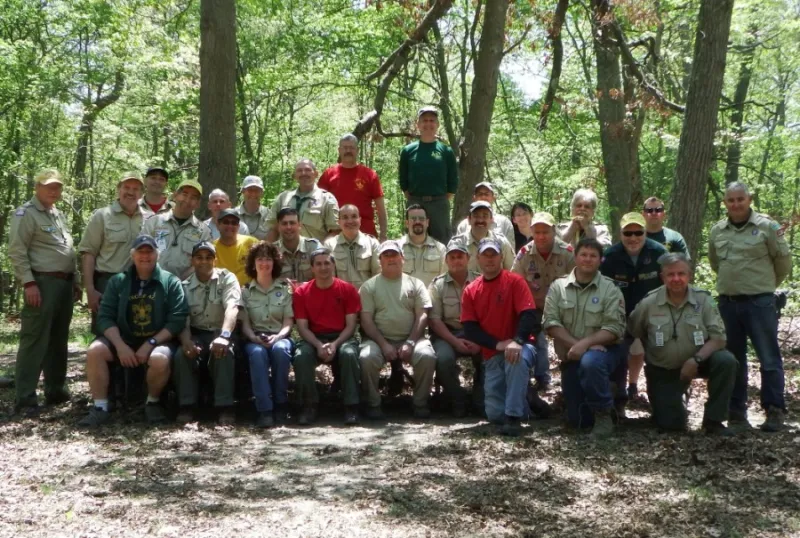
Photo: adult volunteer mentor youth leader scout outdoor training, via thehuntingtonian.com
For every empty seat at a troop meeting, there is a story. Sometimes that seat belongs to a youth member who aged out, moved away, or simply lost interest. But increasingly, the vacant chair at the front of the room belongs to the Scoutmaster—the experienced adult volunteer whose departure can quietly unravel years of institutional knowledge, community trust, and program continuity.
While national conversations about scouting's future tend to center on youth membership figures, those who work closely with councils across the United States will tell you the adult leadership pipeline may be the more urgent problem. Replacing a disengaged teenager is difficult. Replacing a Scoutmaster with fifteen years of experience, a network of community relationships, and an encyclopedic knowledge of advancement requirements is something else entirely.
The Weight Behind the Decision to Walk Away
Understanding why experienced leaders leave requires looking honestly at what the role has become. The position of Scoutmaster has expanded considerably over the past two decades. Leaders today are expected to navigate digital record-keeping platforms, coordinate with schools and chartered organizations, manage increasingly complex parent expectations, satisfy evolving background check and training requirements, and maintain program quality—all on a volunteer basis, often while holding full-time jobs and raising their own families.
Burnout, in this context, is not a personal failing. It is a structural outcome.
Data gathered through council feedback surveys and independent research consistently points to a cluster of recurring departure triggers: time demands that exceed what was originally communicated during recruitment, insufficient support from the council level, a sense of isolation in the role, and the emotional weight of managing youth behavioral challenges without adequate resources. For leaders approaching or entering retirement, the calculus shifts further—many who might otherwise continue simply find that the administrative burden outweighs the reward.
"The moment it stopped feeling like an adventure and started feeling like a second job was the moment I knew I needed to step back," one longtime Scoutmaster in the Pacific Northwest shared in a regional council exit survey. That sentiment, paraphrased in various forms, appears with striking regularity in similar assessments nationwide.
What Councils Are Getting Right
Not every council is watching its leadership pool drain without response. A number of organizations have moved decisively to restructure how they identify, develop, and retain adult leaders—and their results offer a practical blueprint for the broader scouting community.
Several councils in the Midwest have implemented formal mentorship frameworks that pair incoming Scoutmasters with experienced leaders for a structured twelve-month period. Rather than simply shadowing, new leaders are given graduated responsibility—running individual meetings, leading campouts, and managing advancement tracking—while their mentor remains available as a resource and sounding board. The approach mirrors professional onboarding models common in corporate environments and has shown measurable improvements in first-year retention among new adult leaders.
In the Southeast, at least two councils have introduced what they call "leadership continuity planning" as a standard element of troop charter renewals. Troops are required to identify and document a succession candidate before their charter is renewed—not as a punitive measure, but as a structural prompt that forces conversations that would otherwise never happen. The result has been a meaningful increase in co-leader registrations and a reduction in the number of troops that collapse entirely following a single leader's departure.
Other councils have invested in reducing the administrative burden itself. By providing dedicated staff support for paperwork, background check processing, and digital platform navigation, these organizations have freed volunteer leaders to focus on the program elements that originally drew them to scouting. Anecdotal feedback from participating troops suggests that leaders who feel operationally supported are significantly more likely to extend their tenure.
Building a Pipeline Before the Well Runs Dry
Reactive approaches to leadership vacancies—posting on social media, sending emails to troop parents, hoping someone steps forward—are insufficient for the scale of the challenge. Councils serious about rebuilding their leadership pipelines must adopt proactive, systematic strategies.
Identify candidates early. The most reliable source of future Scoutmasters is often the current troop itself. Parents who attend campouts, assist with merit badge clinics, or serve as drivers for troop events are already demonstrating investment. Councils should develop structured pathways that move engaged parents from informal participation into registered assistant leader roles, with clear expectations and genuine support at each stage.
Invest in leadership development as a program, not an afterthought. Training events should be designed with adult learners in mind—offered at varied times, available in hybrid formats where feasible, and structured to build practical skills rather than simply satisfy administrative checkboxes. When leaders feel genuinely prepared for the role, they are more likely to remain in it.
Create peer networks that reduce isolation. Many Scoutmasters, particularly in rural or low-density areas, operate with little contact with other leaders outside their own troop. District-level gatherings, online forums, and regional leader summits can provide the collegial connection that sustains motivation over the long term. ScoutDB's own directory resources can help councils map which troops in a given area might benefit most from facilitated peer connection.
Recognize and celebrate tenure. Institutional recognition of long-serving adult volunteers is not merely ceremonial—it signals organizational values. Councils that publicly honor multi-year leaders, acknowledge milestone anniversaries, and create visible pathways to distinguished service designations reinforce the message that adult leadership is valued, not taken for granted.
Conduct structured exit conversations. When a Scoutmaster does step away, that departure represents an opportunity to gather actionable intelligence. Formal exit interviews—conducted respectfully and without pressure—can surface systemic issues that councils are otherwise unlikely to hear. Aggregated feedback from these conversations should inform program adjustments at the council and district level.
A Structural Problem Requires a Structural Response
The Scoutmaster shortage is not a crisis born of indifference. The adults who have given years—sometimes decades—to their troops did so out of genuine commitment to youth development and community service. Their departures reflect the accumulated friction of a role that has grown more demanding without a corresponding increase in institutional support.
Councils that treat adult leadership retention as a peripheral concern do so at significant risk. A troop without a qualified, experienced leader does not simply underperform—it ceases to function. And when a troop folds, the youth it served disperse, the community relationships dissolve, and the charter organization loses a program it may never recover.
The good news embedded in this challenge is that the solutions are largely known. Mentorship, structured succession planning, administrative support, peer connection, and meaningful recognition are not experimental interventions—they are proven retention mechanisms that function in volunteer organizations across every sector. Scouting councils that apply them with consistency and intention can rebuild leadership pipelines that will sustain their programs for the next generation.
The chair at the front of the room does not have to stay empty. But filling it requires more than hope—it requires a plan.