Beyond the Badge Book: How Troops Are Filling the Curriculum Gaps in Modern Scouting
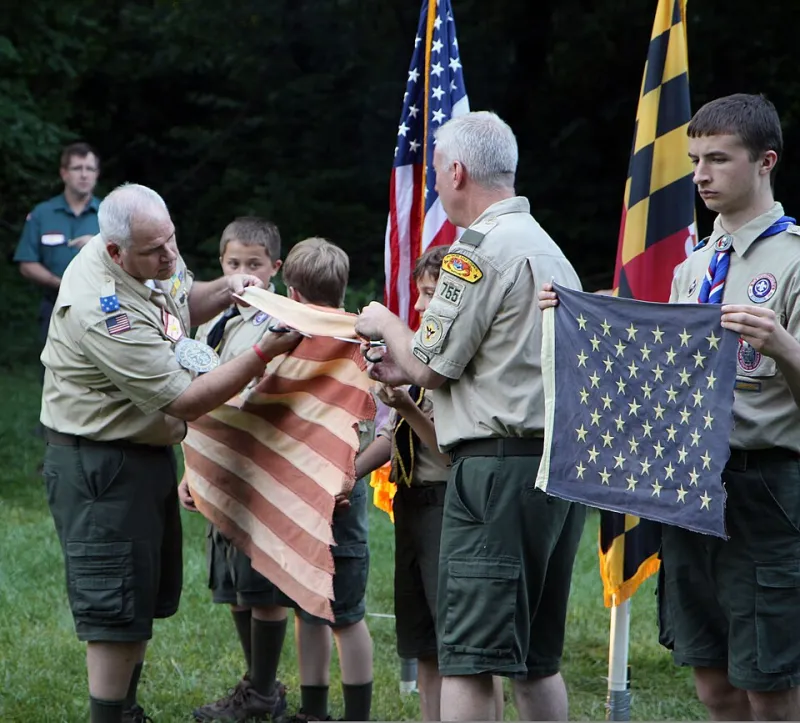
Photo: Staff Sgt. Stephen Crofoot, Public domain, via Wikimedia Commons
For decades, the merit badge system has stood as one of scouting's most recognizable features—a structured, standardized pathway through which millions of American youth have acquired practical skills, from first aid to woodworking to citizenship. Yet as the economy shifts, technology accelerates, and communities grow more complex, a quiet but persistent question has begun circulating among troop leaders, program directors, and scouts themselves: Is the official catalog keeping up?
The answer, depending on who you ask, is complicated.
A Curriculum Rooted in Tradition—and Its Limitations
The Boy Scouts of America currently offers more than 130 merit badges, a number that has expanded gradually over the organization's history. Badges covering topics like Digital Technology, Robotics, and Environmental Science reflect genuine efforts to modernize. But many troop leaders contend that the pace of official curriculum development lags significantly behind the speed at which relevant skills emerge in the broader culture.
Cybersecurity offers a telling example. While the Digital Technology merit badge touches on responsible online behavior and basic computer literacy, it does not comprehensively address network security, data privacy, or the kind of threat-awareness training that cybersecurity professionals consider foundational. For scouts in communities where tech careers represent a primary economic pathway, that gap carries real weight.
"We have kids who are already coding, already thinking about careers in IT," said one troop coordinator based in the Pacific Northwest, who asked not to be identified by name. "The existing badge gives them a starting point, but it doesn't go nearly far enough. We felt an obligation to do more."
Financial literacy presents a similar case. Although the Personal Management merit badge is required for Eagle Scout rank and covers budgeting basics, critics argue it doesn't adequately address topics like credit scores, student loan management, investing fundamentals, or the mechanics of a modern digital economy. For scouts from lower-income households—those who may have the fewest informal opportunities to learn about personal finance at home—the omission can be especially consequential.
What Troops Are Building on Their Own
In response, a growing number of troops have begun designing supplemental programming that operates alongside, rather than in place of, official BSA requirements. These initiatives take several forms: locally organized workshops, partnerships with community organizations, and structured elective programs that troops administer independently.
In suburban Chicago, one troop has partnered with a regional credit union to offer a multi-session financial literacy workshop each spring. Scouts who complete the program receive a troop-issued certificate of achievement—not an official merit badge, but a documented credential that leaders encourage participants to include in scholarship applications and college essays. The program has drawn consistent enrollment for three consecutive years.
Elsewhere, troops in states with significant renewable energy development—Texas, Colorado, and Iowa among them—have introduced energy education modules that go beyond what the existing Energy merit badge covers. These modules incorporate site visits to wind farms and solar installations, Q&A sessions with working engineers, and project components that ask scouts to analyze energy consumption in their own homes. Program directors describe the approach as practical, place-based learning that connects scouting to the economic realities of their specific regions.
Cybersecurity workshops have emerged in multiple metropolitan areas, often facilitated through partnerships with local universities, community colleges, or corporate sponsors with an interest in youth workforce development. In some cases, scouts who complete these programs have gone on to pursue formal certifications, using the troop-organized experience as an on-ramp.
Navigating the Tension With BSA Standards
None of this supplemental activity comes without friction. BSA's advancement program is built on standardization—the idea that a merit badge earned in rural Montana carries the same meaning as one earned in downtown Atlanta. Troop-level innovations, however well-intentioned, exist outside that framework, and some leaders worry about the implications.
"There's a real concern about equity," acknowledged one district-level volunteer with more than 15 years of experience. "If only certain troops—typically those in wealthier areas with stronger community partnerships—can offer these enriched programs, then we're creating a two-tiered experience. That's not what scouting is supposed to be about."
The concern is legitimate. Troops with access to corporate sponsors, university partners, or technically skilled adult volunteers are far better positioned to develop and deliver supplemental programming than those operating in under-resourced communities. Without some mechanism for sharing curriculum, funding, or facilitator expertise, locally developed programs risk widening the very gaps they aim to close.
Some councils have begun addressing this by creating shared resource repositories—essentially internal directories where troop leaders can access workshop materials, partner contact information, and program frameworks developed by other units. The approach is informal but promising, and it mirrors the kind of collaborative infrastructure that ScoutDB's own directory model is designed to support at a broader scale.
What Scouts Themselves Are Saying
Perhaps the most compelling argument for curriculum evolution comes from the scouts themselves. In conversations facilitated through troop meetings and council forums, young people frequently identify skills they wish scouting formally recognized: media literacy, entrepreneurship, mental health first aid, and environmental justice, among others.
"I feel like some of the badges are kind of old-fashioned," said one 16-year-old Life Scout from the Mid-Atlantic region. "I want to learn things that are going to matter when I'm 25. Scouting teaches me a lot, but I also feel like there are whole parts of my future it doesn't really prepare me for."
That sentiment, expressed in various forms by scouts across the country, is not an indictment of the merit badge system—it is, arguably, an expression of genuine investment in it. Young people who care enough to identify what's missing are precisely the kind of engaged participants scouting needs to retain.
A Path Forward
BSA has demonstrated a willingness to add and revise merit badges over time, and the process for proposing new badges does exist—though it is slow and requires significant institutional momentum. In the interim, the most effective response may lie in structured collaboration between troops, councils, and community partners.
For program directors navigating this landscape, a few principles have emerged as broadly applicable. First, supplemental programming should complement, not compete with, official requirements. Second, any locally developed curriculum should be documented thoroughly so it can be shared, evaluated, and potentially scaled. Third, equity must remain a central consideration: if a program can't be offered across a council's full range of troops, its benefits will inevitably be uneven.
The merit badge system is not broken. But it is, by its own design, conservative—a feature that ensures consistency while sometimes sacrificing agility. The troops finding the most success are those treating that conservatism not as an obstacle, but as a baseline to build from, carefully and collaboratively.
For community leaders and program directors looking to explore supplemental advancement models, ScoutDB's directory includes resources and organizational listings that may help identify local partners, curriculum frameworks, and councils already engaged in this work.