Membership in Freefall: Understanding the Forces Behind Declining Scout Enrollment and How Programs Are Fighting Back

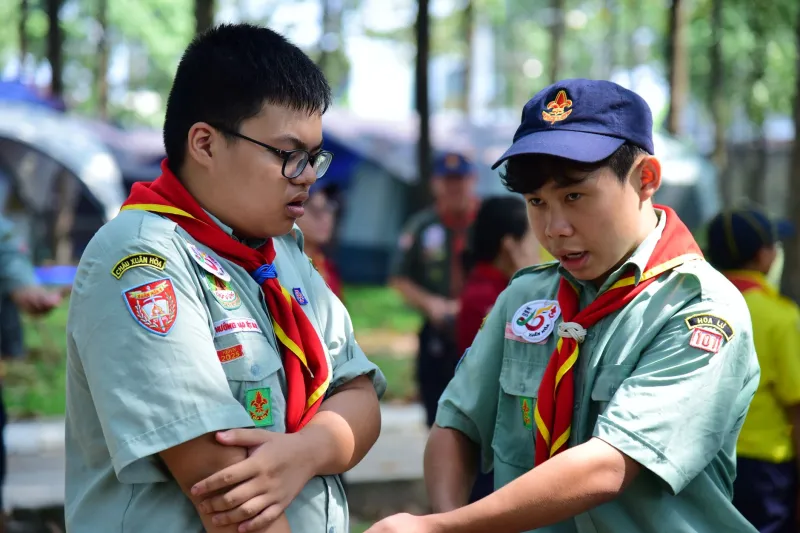
Photo: diverse youth scouts group outdoor activity community program, via img.freepik.com
For decades, scouting served as a near-universal rite of passage for American youth. Weekend campouts, merit badge milestones, and community service projects were fixtures of childhood across the country. Today, however, troop rosters in communities from rural Montana to suburban New Jersey tell a different story. Enrollment numbers have contracted significantly over the past fifteen years, and the organizations responsible for guiding young people through these formative experiences are grappling with a challenge that extends well beyond simply finding enough adult volunteers.
Understanding why youth are disengaging—and what program leaders can do about it—requires a more rigorous look at the data and a willingness to confront some uncomfortable truths.
The Numbers Behind the Narrative
National-level enrollment figures for major scouting organizations have reflected a persistent downward trajectory. While some of this decline accelerated during the COVID-19 pandemic, the trend predates 2020 by a considerable margin. Research from youth development organizations suggests that participation in structured extracurricular activities overall has shifted, with competitive sports, academic enrichment programs, and digital engagement competing for the same limited hours in a child's schedule.
Regional disparities compound the picture. Urban troops frequently report challenges tied to meeting space availability and transportation barriers, while rural programs struggle with geographic isolation and limited access to merit badge counselors and specialized equipment. Suburban programs, often assumed to be the most stable, face their own pressures: a culture of hyper-scheduled youth activity that leaves little room for the open-ended, multi-year commitment that scouting traditionally demands.
Demographic data adds another layer of complexity. Participation rates among Black, Hispanic, and Asian American youth have historically lagged behind national averages, a gap that many organizations have only recently begun to address in earnest. Programs that have made meaningful inroads in underrepresented communities consistently cite intentional outreach and culturally responsive programming as key differentiators.
Root Causes That Rosters Alone Cannot Reveal
When troop leaders are asked why membership is declining, the most common answer is some variation of "families are just too busy." While scheduling pressure is real, it functions more as a symptom than a root cause. A closer examination of programs that have successfully reversed enrollment trends reveals a more nuanced set of underlying factors.
Perceived relevance. Young people and their parents increasingly evaluate activities through a lens of tangible, near-term benefit. Programs that struggle to articulate how scouting skills connect to college applications, career readiness, or everyday life tend to lose prospective members to alternatives that market these connections more explicitly.
Onboarding friction. The initial experience of joining a troop—locating a unit, attending a recruitment night, completing paperwork, purchasing uniforms—can be surprisingly cumbersome. Every additional step in that process represents an opportunity for a family to disengage before they have developed any meaningful connection to the program.
Retention failures in the first year. Industry research across youth-serving nonprofits consistently shows that the highest attrition occurs within the first twelve months of participation. New members who do not form peer relationships quickly, feel excluded from established group dynamics, or find early programming uninspiring are unlikely to remain long enough to experience the program's deeper value.
Stagnant program models. Scouting at its best is adaptive and responsive to the interests of its members. At its worst, it can feel like a rigid sequence of requirements disconnected from contemporary youth culture. Programs that have not revisited their activity calendars, communication channels, or leadership structures in recent years often find themselves struggling to attract and hold the attention of a generation that has grown up with entirely different expectations.
Strategies From Programs That Have Turned the Tide
The discouraging enrollment data is real, but it coexists with a meaningful number of programs that have bucked the trend. Their approaches offer a practical framework for community leaders willing to invest in change.
Audit your recruitment pipeline with the same rigor you apply to advancement records. Successful programs treat prospective member outreach as a structured process, not an annual event. They track where leads originate, measure conversion rates from interest to registration, and identify the specific points where families disengage. Applying this kind of systematic analysis—the same approach that ScoutDB advocates for advancement and program management—to recruitment transforms guesswork into actionable intelligence.
Build partnerships with schools, libraries, and community organizations. Programs reporting enrollment growth frequently cite institutional partnerships as a primary driver. Embedding recruitment presentations in after-school programs, partnering with public libraries for merit badge workshops, or collaborating with local community centers to reach families who might not otherwise encounter scouting can substantially expand a troop's reach.
Simplify the path from interest to membership. Review every step of your onboarding process and eliminate unnecessary barriers. Digital registration, clear uniform guidance, and a structured new-member orientation that pairs incoming scouts with established peers can meaningfully reduce early attrition.
Invest in program quality, not just program quantity. A calendar packed with activities is not the same as a calendar filled with compelling ones. Soliciting genuine input from current members about what they want to do—and then delivering on that feedback—builds the internal advocacy that drives organic recruitment. When scouts enthusiastically describe their experiences to peers, they become the program's most effective ambassadors.
Address demographic gaps directly. Programs that have diversified their membership successfully did not accomplish this through passive openness. They identified specific communities they were not reaching, sought out trusted community leaders within those groups, and adapted their programming and communication to reflect a broader range of cultural backgrounds and family circumstances.
The Role of Data Infrastructure in Sustainable Growth
One of the distinguishing characteristics of programs that sustain enrollment recovery over multiple years—rather than experiencing a single good recruitment season followed by a return to decline—is their investment in data infrastructure. Maintaining organized, accessible records of member demographics, participation patterns, and retention rates allows program leaders to identify problems early and respond with precision.
This is precisely the kind of organizational capacity that a well-maintained directory and database platform is designed to support. When troop leaders can quickly access historical enrollment trends, identify which recruitment channels have produced the most engaged members, or flag at-risk youth before they quietly drift away, they are positioned to make decisions that compound positively over time.
A Moment for Honest Assessment
Declining enrollment is not an inevitable outcome for scouting programs, but reversing the trend requires more than optimism and a well-attended recruitment night. It demands an honest assessment of what is working, a willingness to change what is not, and the organizational discipline to track progress systematically.
The programs demonstrating the most durable growth are not those with the most charismatic leaders or the most generous budgets. They are the ones that treat member recruitment and retention as a continuous operational priority—one that deserves the same structured attention as any other dimension of program management. For community leaders prepared to approach the challenge with that level of seriousness, the data suggests that recovery is not only possible but achievable.