Supply, Demand, and the Scout Patch: Rethinking How Troops Manage Merit Badge Access

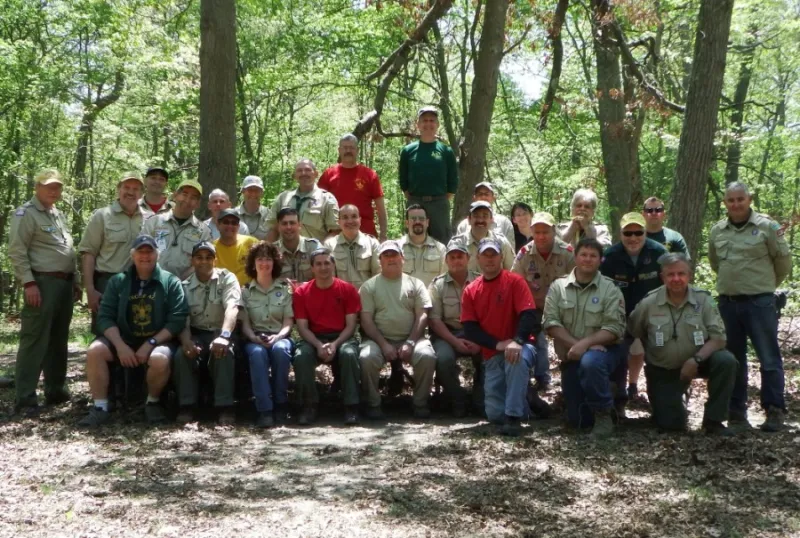
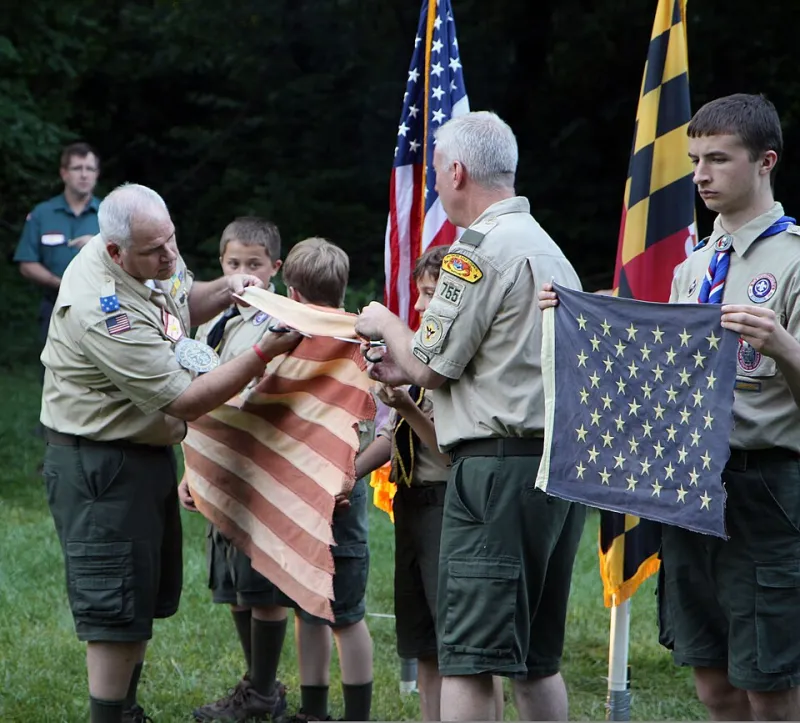
Photo: Boy Scouts of America, Public domain, via Wikimedia Commons
The Invisible Market Inside Every Scout Troop
Walk into most scout troops across the United States and you will find the same quiet imbalance: a handful of merit badges offered repeatedly, year after year, while a longer list of equally valuable credentials sits dormant for lack of a willing or qualified counselor. Cooking, First Aid, and Citizenship in the Community tend to draw a crowd. Journalism, Nuclear Science, and Textile Arts rarely do.
This disparity is not accidental. It reflects something that program administrators seldom discuss openly: merit badge availability operates according to basic economic principles. Supply is constrained by the number of registered merit badge counselors in a given area. Demand is shaped by scout interest, advancement requirements, and the informal influence of peer culture within a troop. When those two forces fall out of alignment, scouts lose access to meaningful learning opportunities—and in some cases, their advancement timelines suffer as a result.
For troop leaders willing to examine their programs through a more analytical lens, the payoff can be significant. Troops that treat badge accessibility as a resource allocation problem—rather than simply a scheduling inconvenience—tend to offer broader programming, retain scouts longer, and attract more engaged adult volunteers.
Diagnosing the Imbalance
The first step toward a more equitable badge ecosystem is understanding exactly where the gaps exist. Many troop leaders operate on instinct, offering the same slate of badges they were taught or the ones their most active counselors happen to know. A more systematic approach involves auditing what has actually been completed by scouts over the past two to three years, then comparing that list against the full merit badge catalog.
When this exercise is conducted honestly, the results are often striking. Some troops discover that scouts have been completing the same eight to ten badges on rotation, with little variation. Others find that certain Eagle-required badges are consistently delayed because only one counselor is available—and that individual's schedule bottlenecks advancement for multiple scouts simultaneously.
Troop committees can also survey scouts directly. Asking young people which badges they are genuinely interested in pursuing—and which they feel they cannot access—provides data that is both practical and affirming. It signals to scouts that their preferences matter, while simultaneously giving leaders actionable intelligence about where counselor recruitment efforts should be focused.
The Counselor Supply Problem
Merit badge counselors are volunteers, and like all volunteers, they gravitate toward topics they know well and feel confident teaching. A retired nurse may happily teach First Aid year after year. A software engineer may be eager to lead Programming or Electricity. But the badges that fall outside common professional backgrounds—Beekeeping, Leatherwork, Plumbing, or Surveying, for example—often go unrepresented simply because no one in the troop's immediate social network has relevant expertise.
Some councils have begun addressing this by building shared counselor registries that span multiple troops. Rather than each troop maintaining its own insular list, scouts are connected to counselors anywhere within the council's geographic footprint. This model dramatically expands the effective supply of available badges without requiring any single troop to recruit an exhaustive roster of experts.
Virtual counseling has further extended this model's reach. Since the pandemic normalized video conferencing in nearly every aspect of American life, a growing number of councils have developed protocols for badge counseling conducted remotely. A professional welder in rural Nebraska can now serve as a merit badge counselor for a troop in suburban Maryland. The logistics require some coordination—councils must establish verification standards and ensure that any hands-on requirements are fulfilled safely and locally—but the potential for expanding badge access is considerable.
Badge-Swapping Networks: A Grassroots Solution
At the troop level, one of the most practical innovations emerging in recent years is the informal badge-swapping arrangement between neighboring units. In this model, two or more troops agree to share counselor resources on a reciprocal basis. Troop A may have a registered counselor for Astronomy and Robotics; Troop B may have expertise in Cooking and Sustainability. Rather than each troop offering only what it can internally support, scouts from both units gain access to a combined pool of instruction.
Leaders who have implemented this approach consistently describe it as one of the more effective tools in their program management toolkit. It requires a modest investment in coordination—typically a shared calendar, clear communication about scheduling, and an agreed-upon protocol for handling merit badge paperwork—but the return in terms of badge diversity is substantial.
District-level events, such as merit badge fairs and counselor showcases, operate on a similar principle at a larger scale. These events concentrate counselor expertise in a single location for a defined period, allowing scouts from across a district to complete requirements for badges they might otherwise never encounter. For troops in rural or low-density areas where the counselor pool is especially thin, district events can be essential rather than supplementary.
Matching Demand to Real Scout Interests
Not every underserved badge deserves equal investment. Before committing resources to recruit a counselor for a specific badge, leaders benefit from evaluating genuine demand. Is this badge being requested by multiple scouts, or by one particularly motivated individual? Does it align with advancement pathways that scouts in the troop are actively pursuing? Is there a professional or community connection that might make counselor recruitment realistic?
This kind of triage thinking—borrowed from the logic of resource allocation in organizational management—helps troops prioritize where to focus limited volunteer recruitment energy. It also prevents the common mistake of recruiting a counselor for a badge that generates initial excitement but sees little follow-through once the novelty wears off.
Some troops have had success creating interest-based working groups, where scouts who share enthusiasm for a particular subject are connected with an adult who has relevant knowledge, even before that adult is formally registered as a counselor. This pipeline approach builds relationships that often lead to long-term counselor commitments, rather than one-time engagements.
Thinking Strategically About Program Breadth
The merit badge system is one of scouting's most enduring features precisely because it connects young people with real-world knowledge and skill. When access to that system is concentrated around a narrow band of offerings, the program's educational breadth narrows with it.
Troop leaders who adopt a strategic mindset about badge accessibility—mapping their current offerings, identifying gaps, building cross-troop partnerships, and recruiting counselors with intention—are doing more than administrative work. They are preserving the integrity of a program designed to expose scouts to the full range of human endeavor.
ScoutDB maintains resources to help troop leaders connect with counselor networks, identify district-level badge events, and evaluate their current program offerings against broader regional data. A well-managed badge ecosystem does not happen by accident. It is the product of deliberate planning, community partnership, and a willingness to think about program design with the same rigor applied to any well-run organization.