Unequal Paths to Eagle: How Geography and Resource Gaps Are Limiting Merit Badge Access for Rural Scouts

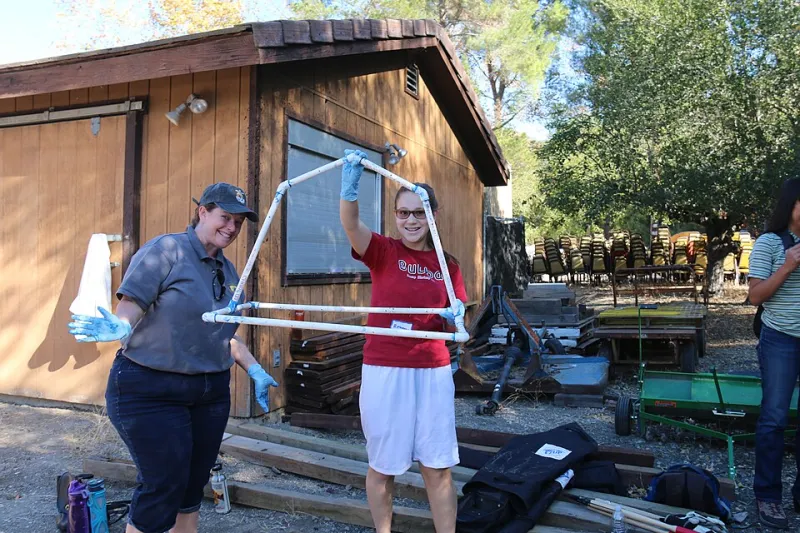
Photo: Amelia Bartlett ameliabartlett, CC0, via Wikimedia Commons
For a scout in suburban Chicago or the greater Atlanta metro area, earning a merit badge in aviation, robotics, or medicine may require little more than a short drive and a willing counselor. For a scout growing up in rural Appalachia, the Mississippi Delta, or the high plains of western Kansas, those same badges can feel like they belong to a different program entirely—one that simply does not exist where they live.
The merit badge system is one of scouting's most enduring and celebrated features, offering young people a structured pathway to explore careers, develop skills, and demonstrate competence across dozens of disciplines. Yet a closer examination of how that system functions across different geographies and socioeconomic contexts reveals a persistent and largely underdiscussed disparity. Not all scouts have equal access to the full catalog of advancement opportunities, and the consequences of that inequality extend well beyond rank progression.
The Anatomy of the Gap
Merit badge access depends on several intersecting factors: the availability of registered and trained merit badge counselors, proximity to relevant facilities or subject-matter experts, and the capacity of local troops to organize or fund specialized programming. In densely populated areas, these resources tend to cluster naturally. A troop in a mid-sized city can often draw on a hospital system for the Medicine badge, a local engineering firm for Electronics, or a nearby airport for Aviation. The community infrastructure does much of the organizational work.
In rural communities, that infrastructure is often absent or severely limited. A troop operating in a county with a population under 10,000 may have only a handful of registered merit badge counselors covering a fraction of the more than 130 available badges. Scouts in those areas frequently find themselves able to earn merit badges in areas like Camping, Cooking, or First Aid—badges that align with general outdoor skills—while specialized badges tied to professional fields, technology, or the arts remain effectively out of reach.
Socioeconomic constraints compound the geographic ones. Transporting scouts to regional merit badge fairs or university-hosted workshops requires both funding and parental availability. For troops serving communities where families are working multiple jobs or lack reliable transportation, those opportunities are not simply inconvenient—they are inaccessible.
What the Data Suggests
While comprehensive national data on merit badge completion rates broken down by region or income level is not consistently published in publicly accessible form, conversations with troop leaders and district executives across multiple councils paint a consistent picture. Troops in rural districts routinely report that scouts plateau in their advancement not because of a lack of motivation or effort, but because the specific badges required for Eagle Scout—or badges that align with a young person's genuine interests—simply cannot be earned locally.
Some council-level advancement reports have noted that Eagle Scout completion rates in rural districts lag behind those in suburban districts within the same council, a disparity that leaders frequently attribute at least in part to merit badge access rather than scout engagement. The badge gap is not the only variable, but it is a meaningful one.
Innovative Models Closing the Distance
Despite these structural challenges, a number of troops, districts, and councils have developed approaches that meaningfully expand access for scouts in underserved areas. Their models offer practical templates for leaders navigating similar constraints.
Virtual Merit Badge Workshops
The broad adoption of video conferencing tools during and after the pandemic created an unexpected opportunity for scouting organizations. Several councils have since formalized virtual merit badge programming, connecting scouts in rural areas with counselors located hundreds of miles away. A scout in rural Montana can now participate in a Citizenship in the Nation workshop led by a counselor in Billings, or complete requirements for the Programming merit badge with guidance from a software developer who volunteers remotely.
Virtual delivery is not appropriate for every badge—some requirements mandate hands-on demonstration or in-person verification—but for a significant portion of the catalog, it removes geography as a barrier almost entirely. Troops that have adopted this model report meaningful increases in the range of badges their scouts are able to pursue.
Regional Partnership Clusters
Several rural districts have organized multi-troop partnerships that pool counselor expertise across a wider geographic area. Rather than each troop attempting to recruit its own roster of specialized counselors, participating troops share a regional directory and coordinate scheduling so that a counselor registered with one troop is accessible to scouts across several. Weekend merit badge camps hosted on a rotating basis allow scouts from dispersed communities to gather in one location and work through multiple badges in a concentrated format.
This cluster model reduces the organizational burden on any single troop while substantially expanding the menu of available badges. It also creates inter-troop relationships that strengthen the broader district community.
University and Community College Partnerships
Institutions of higher education have proven to be underutilized partners for rural troops. Faculty members, graduate students, and campus programs in fields ranging from agriculture to computer science to public health have, in several documented cases, agreed to serve as merit badge counselors or host troop visits that satisfy badge requirements. For scouts in regions where professional networks are thin, a local agricultural extension office or community college campus can function as a bridge to expertise that would otherwise be unavailable.
Leveraging National and Council-Level Resources
ScoutDB's directory includes listings for council-sponsored merit badge programs, virtual counselor registries, and regional advancement events that many troop leaders—particularly newer ones—may not be aware of. Actively consulting those resources and registering troop needs with the district advancement committee can open doors that are not visible at the troop level alone.
The Broader Stakes
The merit badge system is not simply a mechanism for earning ranks. It is, at its best, a structured introduction to a wide range of professional fields, civic responsibilities, and personal disciplines. When scouts in rural or low-income communities are systematically denied access to that breadth of experience, the consequences are not limited to their scouting records. They are denied the exploratory opportunities that help young people identify interests, build confidence, and connect with mentors in fields they might otherwise never encounter.
Troop leaders working in these communities are not failing their scouts when access gaps exist—they are operating within structural constraints that require systemic as well as local responses. But awareness of those constraints, and familiarity with the models that have successfully addressed them, is the necessary starting point.
A Call for Systemic Attention
Councils and national scouting organizations have a meaningful role to play in formalizing and scaling the solutions that individual troops and districts have pioneered. Investing in virtual counselor infrastructure, supporting regional partnership frameworks, and building robust publicly accessible directories of available counselors by specialty and geography would go a long way toward ensuring that a scout's zip code does not determine the ceiling of their advancement journey.
The merit badge gap is a solvable problem. The tools, the models, and the motivated leaders necessary to address it already exist. What remains is the collective will to treat equitable access to advancement not as a secondary concern, but as a core commitment of the scouting mission.