Every Scout's Journey Is Different: Helping Families Embrace Progress Over Pace

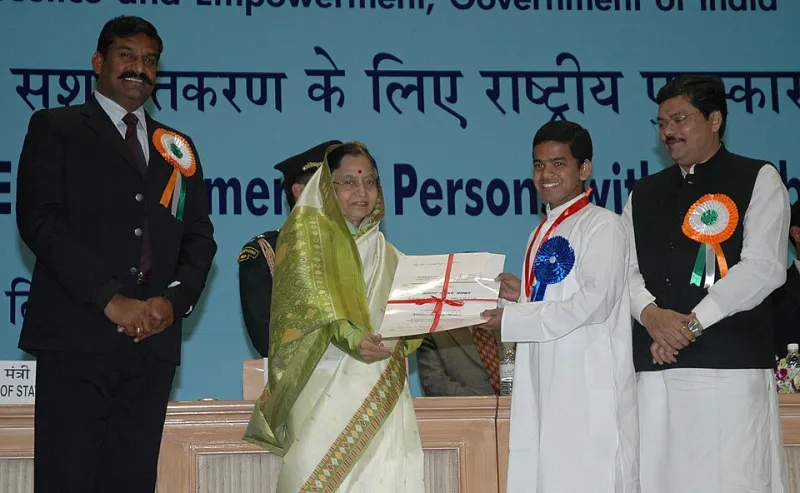
Photo: Stephen Armstrong , CC BY-SA 2.0, via Wikimedia Commons
For many families, the moment a child pins on a Scout uniform marks the beginning of something they hope will be transformative. And it often is—just not always on the timeline they imagined. When a neighbor's child earns three merit badges before the first campout is even scheduled, or a sibling blazes through ranks that another child has been working on for two years, the emotional math for parents can become complicated fast.
Troop leaders across the country frequently report that one of the most delicate conversations they navigate has nothing to do with logistics, funding, or scheduling. It is the conversation about pace—and about what advancement in scouting is actually supposed to mean.
The Comparison Trap: Why It Happens and Why It Matters
American parenting culture places enormous emphasis on visible achievement. Report cards, sports standings, standardized test scores—there is rarely a shortage of benchmarks against which families measure their children. Scouting, with its structured rank system and visible merit badge sashes, can inadvertently feed that instinct.
When parents see another scout's sash filling up while their own child's remains sparse, something shifts. What began as encouragement can quietly become pressure. And children, who are remarkably attuned to parental anxiety, often sense that shift before a single word is spoken.
The consequences are worth taking seriously. Research in youth development consistently shows that externally imposed pressure around achievement—even well-intentioned pressure—can erode intrinsic motivation. A scout who earns a badge to satisfy a parent's expectations is having a fundamentally different experience than one who earns it because they genuinely wanted to learn wilderness first aid or radio communication. One builds a skill; the other builds anxiety.
Troop leaders are not therapists, but they are often the first adults outside the family to observe this dynamic in action. That puts them in a meaningful position to intervene constructively.
What Realistic Timelines Actually Look Like
One of the most useful things a troop can do is demystify the advancement process before families have a chance to develop unrealistic expectations. This means going beyond the rank requirement handout and actually talking—at new scout orientations, parent meetings, and one-on-one conversations—about what typical progression looks like in practice.
The honest answer is that there is no single typical progression. A scout who joins at age eleven and earns Eagle at seventeen has taken a different path than one who earns it at fifteen, but both paths are legitimate. Some scouts move quickly through early ranks and slow down considerably as requirements become more demanding. Others take their time in the beginning and accelerate once they find their footing. Many experience plateaus that have nothing to do with effort or commitment—school transitions, family changes, and shifting personal interests all play a role.
When troops frame advancement this way—as a nonlinear, individualized journey rather than a race with a finish line—parents are better equipped to interpret their child's pace accurately. A scout who has been working on the same rank for eighteen months is not failing. They may be dealing with a difficult school year, developing foundational skills that will accelerate future progress, or simply processing experiences at a deeper level than a faster-moving peer.
Building a Culture That Celebrates Incremental Progress
Directory platforms like ScoutDB exist in part because the scouting ecosystem is vast and varied—and because the resources that help troops thrive are not always easy to find. One underutilized resource is the practice of structured, intentional recognition for progress that falls short of a rank completion.
Some troops have adopted milestone acknowledgment practices that celebrate the completion of individual requirements, not just full ranks. A brief mention at a troop meeting, a note in the troop newsletter, or a simple conversation between a scout leader and a parent can communicate something important: the work happening between badges counts.
This approach also helps address the visibility problem. Merit badges and rank patches are public and tangible. The hours a scout spends practicing knots, working through a difficult citizenship requirement, or returning repeatedly to a skill they struggled with the first time—those are invisible to most observers. Making them visible, even informally, reframes what progress looks like.
Leaders can also encourage scouts to maintain personal logs or journals that document what they have learned, not just what they have completed. This kind of reflective practice has dual benefits: it reinforces learning, and it gives scouts—and their parents—a concrete record of growth that transcends the rank chart.
Talking to Parents Without Dismissing Their Concerns
It would be a mistake to treat every anxious parent as someone who simply needs to be corrected. Many parents carry their own complicated histories with achievement and performance, and their investment in their child's scouting progress often comes from a place of genuine love and hope. The goal is not to dismiss those feelings but to redirect them productively.
Leaders who approach these conversations with curiosity rather than judgment tend to get further. Asking a parent what they most hope their child gains from scouting—before launching into a reassurance about timelines—often reveals that the underlying wish is not really about badges at all. It is about belonging, confidence, resilience, or friendship. Those are outcomes that rarely appear on a rank card, and they are also outcomes that unfold on their own schedule.
When a parent's concern is more urgent—when they feel their child is genuinely struggling or disengaging—that is a different conversation, and one worth having with more structure. Some troops designate an advancement coordinator or experienced volunteer specifically to serve as a resource for families navigating these moments. Having a named, approachable point of contact can make it easier for parents to raise concerns before they become significant problems.
What Scouts Need Most From the Adults Around Them
At the center of all of this is the scout—a young person who is trying to figure out who they are, what they are capable of, and where they belong. Scouting at its best offers a rare combination: structured challenge and genuine community. That combination works best when the adults in a scout's life are aligned in their understanding of what success looks like.
A scout who moves at their own pace and feels supported in doing so is far more likely to remain engaged over the long term than one who earns badges quickly under pressure and burns out before reaching their potential. Retention, after all, is one of the most persistent challenges facing scouting organizations nationwide. Addressing the root causes of early dropout—and comparison anxiety among families is a meaningful contributor—is as much a program management issue as it is a wellbeing one.
Troop leaders who invest in parent education, normalize diverse advancement timelines, and build cultures of incremental recognition are not just being kind. They are building the kind of program that keeps scouts coming back—year after year, badge by badge, at exactly the pace that is right for them.