From Vision to Charter: A Practical Roadmap for Launching a New Scout Troop in Your Community
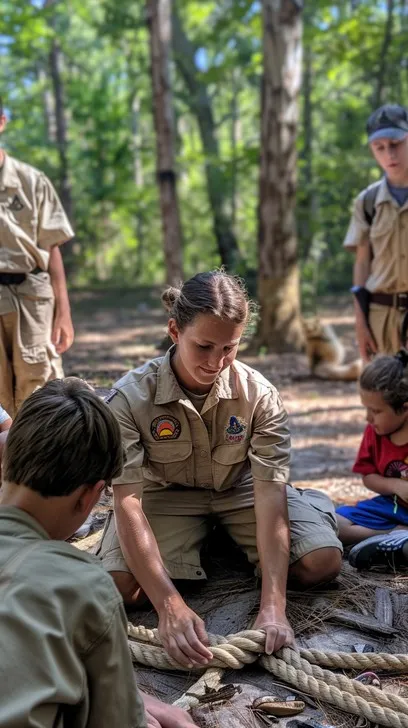
Photo: adult volunteer leader teaching children outdoor scouting activity, via images.stockcake.com
Every thriving Scout troop in the United States began the same way: with one person who decided their community needed one. Whether you were inspired by a neighbor's child earning an Eagle Scout rank, a gap in local youth programming, or simply a desire to give back, that initial conviction is the most important ingredient in the process. What comes next, however, requires careful planning, clear communication, and a working knowledge of how the national scouting infrastructure operates.
ScoutDB has compiled this step-by-step guide to help new community leaders move from enthusiasm to a fully registered, meeting-ready troop — without losing momentum along the way.
Step 1: Identify and Secure a Charter Organization
In the Boy Scouts of America (BSA) model, every troop must be sponsored by a chartered organization — a civic group, religious institution, school, or community nonprofit that agrees to oversee the unit's operation. This is not a formality. The charter organization provides the troop with legitimacy, a point of institutional accountability, and often a meeting location.
Common charter partners include faith communities, Rotary clubs, American Legion posts, parent-teacher organizations, and neighborhood associations. When approaching a potential sponsor, come prepared with a brief written proposal that outlines your vision for the troop, the age group you plan to serve, estimated membership, and what the organization would be asked to provide. Most sponsors are not required to contribute financially; their primary role is oversight and community endorsement.
Once a charter organization expresses interest, a representative from that body — typically called the Chartered Organization Representative (COR) — will serve as the formal liaison between the troop and your local BSA council. Identify this person early, as their signature will be required on registration documents.
Step 2: Connect with Your Local BSA Council
The United States is divided into regional BSA councils, each of which provides administrative support, training resources, and access to camping facilities for troops in its jurisdiction. Before you recruit a single youth member, contact your local council's district executive. This staff member is specifically assigned to help new units get started and can walk you through council-specific requirements, upcoming leader training dates, and the unit registration process.
You can locate your local council through the BSA's national website or through ScoutDB's organization directory. Do not skip this step — councils vary in their onboarding processes, and working with your district executive from the outset will prevent costly delays.
Step 3: Recruit and Train Adult Leaders
A Scout troop cannot function without registered adult volunteers. At minimum, BSA requires two trained adult leaders for any troop activity, and most new troops aim to recruit at least three to five adults before their first meeting. Ideal candidates include parents of prospective Scouts, retired educators, military veterans, and professionals with skills in outdoor education, first aid, or project management.
All adult leaders must complete BSA's Youth Protection Training (YPT) before they can register — no exceptions. This free online course covers mandatory reporting obligations, boundary policies, and safe scouting practices. Beyond YPT, position-specific training modules are available through the BSA's online learning center and through council-hosted weekend courses.
When recruiting leaders, be transparent about time commitments. Weekly meetings, monthly outings, and occasional weekend campouts are standard expectations. Leaders who feel blindsided by the workload are among the most common reasons new troops struggle in their first year.
Step 4: Secure a Consistent Meeting Location
Youth programs thrive on routine, and nothing disrupts that routine more than a meeting location that changes week to week. Your charter organization may offer space, but if it cannot, explore community centers, public library meeting rooms, school gymnasiums, and fire station community halls. Many of these venues offer free or reduced-cost access to registered youth organizations.
When evaluating a space, consider the following: Is there adequate room for indoor activities and crafts? Is there a secure outdoor area nearby for games? Is parking sufficient for families dropping off children? Is the space accessible to youth with physical disabilities? A consistent, welcoming environment signals stability to both youth members and their families.
Step 5: Register Youth Members and Establish Your Roster
With leadership in place and a meeting location confirmed, you are ready to open enrollment. Registration is completed through your local council and requires a completed application form and annual membership fee for each youth participant. BSA's current fee structure includes both national and council-level components; your district executive can provide exact figures.
To recruit youth members, consider distributing flyers through local elementary and middle schools, posting in neighborhood social media groups, and tabling at community events. A brief informational night — held before the troop's official launch — allows families to ask questions and meet the leadership team before committing.
Recruitment Checklist:
- Flyers distributed to local schools and libraries
- Informational night scheduled and promoted
- Online registration link active and tested
- Membership fees clearly communicated to families
- Scholarship or financial assistance options identified
Step 6: Plan and Execute Your First Three Meetings
The first meeting sets the tone for everything that follows. Keep it structured but not rigid. Introduce the leadership team, explain what Scouting is about, distribute handbooks, and conduct a simple, engaging activity — a team-building game, a basic knot-tying demonstration, or a short nature walk if outdoor space is available.
Meetings two and three should introduce the troop's patrol structure, begin advancement discussions, and allow youth members to have input in planning upcoming activities. Scouts who feel ownership over their troop's direction are far more likely to remain engaged.
Common Pitfalls to Avoid:
- Overloading the first meeting with administrative paperwork
- Failing to communicate meeting schedules to families in advance
- Neglecting to assign clear roles to each adult leader
- Skipping the patrol method in favor of a single-group structure
- Underestimating the time required for advancement record-keeping
Building Something That Lasts
Launching a Scout troop is a significant undertaking, but it is far from an impossible one. Thousands of community leaders across the United States have done exactly what you are setting out to do, and the infrastructure of the BSA — from local councils to national training programs — exists specifically to support them.
The most durable troops are those built on clear communication, consistent programming, and a genuine commitment to youth development rather than institutional checkbox-completion. As you work through each stage of this process, keep that purpose at the center of every decision.
ScoutDB's organization directory and resource library are available to help you identify local councils, locate training opportunities, and connect with experienced leaders in your region. The groundwork you lay today will shape the experiences of young people in your community for years to come.